 Free Eye Screening Camp in Dibrugarh, Assam: Maeyes Foundation Vision Care Project
Good vision is essential for education, independence, productivity, and overall well-being. However, access to regular eye examinations and vision care can be challenging for people living in rural and underserved communities. Community eye screening programmes can help raise awareness, identify possible vision problems, and encourage people to seek appropriate professional care.
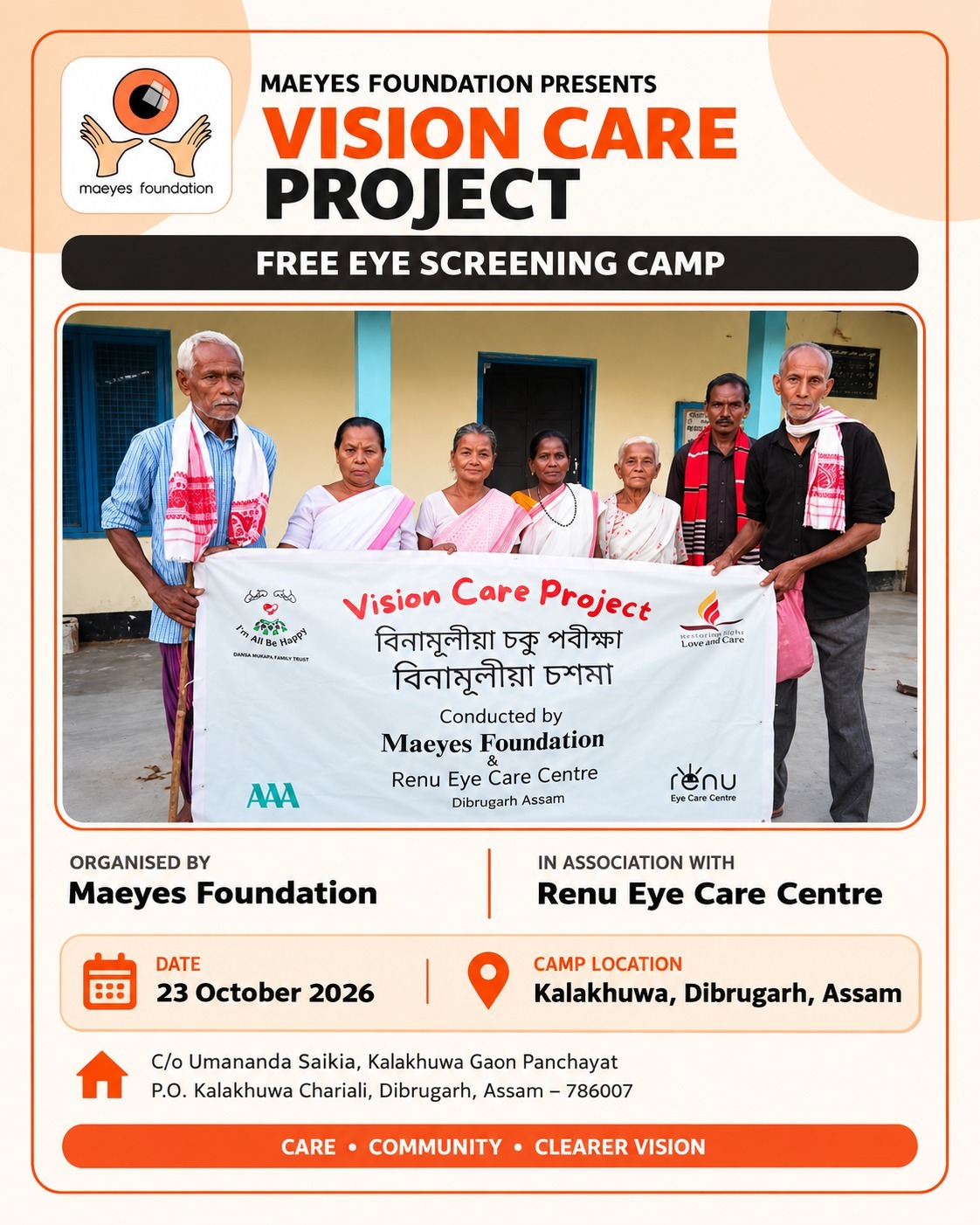
On 23 October 2026, Maeyes Foundation organised a Vision Care Project free eye screening camp at Kalakhuwa, Dibrugarh, Assam, in association with Renu Eye Care Centre. The initiative focused on community eye-health awareness and screening, highlighting the importance of accessible vision care for people of different age groups.
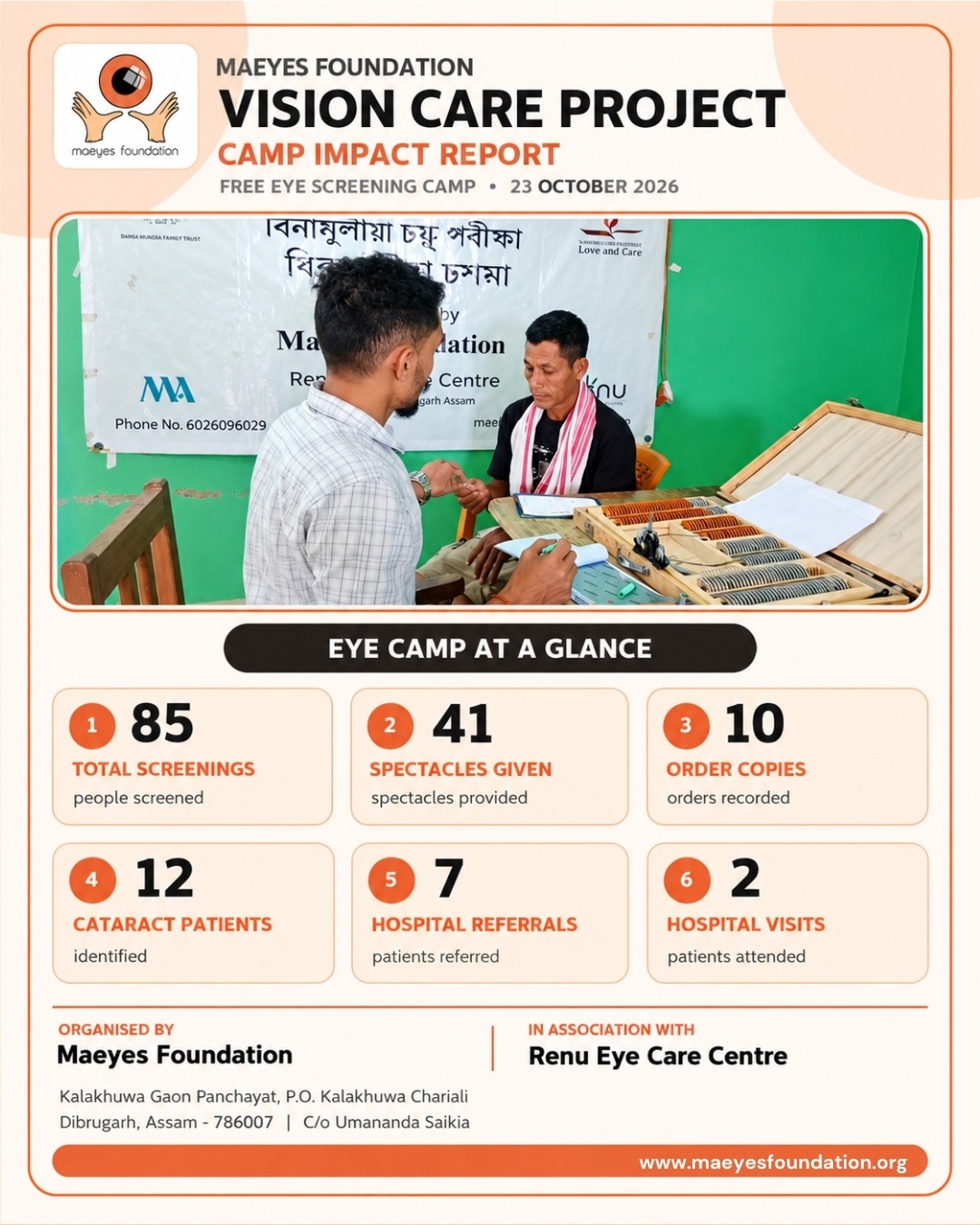
The camp's reported results included 85 screenings, 41 spectacles provided, 10 order copies recorded, 12 cataract patients identified, 7 hospital referrals, and 2 hospital visits. These figures demonstrate the activity recorded during the initiative and the importance of connecting community members with appropriate eye-care services.
Maeyes Foundation's Vision Care Project in Assam
The Vision Care Project reflects Maeyes Foundation's commitment to promoting eye-health awareness and supporting community-focused initiatives. By bringing attention to the importance of regular eye examinations, such programmes encourage individuals and families to take their vision concerns seriously.
The initiative was organised by Maeyes Foundation in association with Renu Eye Care Centre. Collaboration between community organisations and eye-care providers can help people learn about available services and understand when further professional assessment may be necessary.
The camp at Kalakhuwa, Dibrugarh, highlights the value of community participation in making eye health an important part of overall healthcare awareness.
Free Eye Screening Camp at Kalakhuwa, Dibrugarh
The eye screening camp took place on 23 October 2026 at Kalakhuwa Gaon Panchayat, near P.O. Kalakhuwa Chariali, Dibrugarh, Assam – 786007. The location and activity were documented as part of the Maeyes Foundation Vision Care Project.
Community-based screening initiatives can help bring basic vision assessments closer to residents who may otherwise face barriers to accessing eye-care information and services.
By encouraging people to pay attention to changes in their eyesight, eye-health initiatives can support timely consultations with qualified professionals and help participants understand the importance of appropriate follow-up care.
Vision Care Camp Impact Report: Key Statistics
The reported figures from the 23 October 2026 eye screening camp provide an overview of the activity and services recorded.
85 Total Screenings: A total of 85 screenings were recorded during the camp.
41 Spectacles Provided: Spectacles were provided to 41 participants, as reported in the camp impact report.
10 Order Copies: Ten spectacle order copies were recorded.
12 Cataract Patients Identified: Twelve patients were recorded as identified cataract cases.
7 Hospital Referrals: Seven patients were referred to a hospital for further attention.
2 Hospital Visits: Two hospital visits were recorded in the camp report.
These figures represent the reported camp activity. Screening results and referrals do not necessarily confirm a diagnosis or treatment outcome. Individual medical needs and subsequent care depend on professional assessment and follow-up.
Why Are Free Eye Screening Camps Important?
Eye screening camps can help increase awareness of vision problems and encourage people to seek professional advice when needed. They are particularly valuable in communities where regular eye examinations may be delayed because of distance, cost, limited awareness, or other practical barriers.
A screening programme can help identify people who may benefit from further examination. It can also provide an opportunity to discuss common eye-health concerns and explain why regular vision assessments matter.
However, a basic screening is not a substitute for a comprehensive eye examination. People who are advised to undergo further assessment should consult a qualified eye-care professional.
The Importance of Early Detection of Eye Problems
Some eye conditions can develop gradually, and early symptoms may not always be obvious. Regular professional eye examinations can help identify potential concerns and guide people towards appropriate care.
Individuals should seek professional advice if they experience symptoms such as:
Blurred or cloudy vision.
Difficulty reading or seeing distant objects.
Difficulty seeing clearly at night.
Persistent redness or irritation.
Unusual sensitivity to light.
Frequent headaches associated with visual activities.
Changes in eyesight that affect everyday tasks.
These symptoms can have different causes and do not necessarily indicate a particular eye disease. Sudden vision loss or a sudden significant change in vision requires urgent medical attention.
Understanding Cataracts and the Need for Professional Eye Care
Cataracts involve clouding of the eye's natural lens and can cause blurred vision, glare, difficulty seeing at night, or faded colours. They are more common with increasing age, although other factors can also contribute.
A qualified eye-care professional can assess symptoms, determine whether cataracts are present, and explain suitable management or treatment options.
The Kalakhuwa camp report recorded 12 cataract patients identified during the initiative. The figure highlights the importance of appropriate professional assessment and follow-up for people who may have cataract-related concerns.
Identification during screening does not, by itself, establish the severity of a condition or confirm that a patient has undergone treatment.
How Spectacles Can Support Better Vision
Correctly prescribed spectacles can help people with refractive errors see more clearly and carry out everyday activities more comfortably.
Clear vision can be important for children learning in school, adults working or managing household responsibilities, and older people carrying out daily tasks.
An eye-care professional can assess vision and determine whether spectacles are required. The appropriate prescription depends on the individual's examination results and vision needs.
The provision of 41 spectacles was recorded in the Vision Care Project impact report. Such activities highlight the importance of connecting people who need vision correction with suitable eye-care services.
Why Hospital Referrals and Follow-Up Matter
Screening may identify people who require a more detailed examination or specialist attention. In such cases, referrals can help direct individuals towards appropriate healthcare services.
The camp report recorded seven hospital referrals and two hospital visits. These figures describe the referrals and visits documented in the report and should not be interpreted as evidence of completed treatment or specific clinical outcomes.
People who receive a referral should follow the advice provided by their healthcare professional and attend recommended appointments whenever possible.
Follow-up is an important part of eye care because some conditions require additional examinations, monitoring, or treatment.
Promoting Eye Health in Rural Communities of Assam
Community eye-health initiatives can help improve awareness among residents of rural and semi-urban areas. In places where healthcare access may be affected by distance, financial circumstances, or limited information, outreach programmes can encourage people to learn about available services.
Families, community leaders, volunteers, charitable organisations, and healthcare providers can work together to promote regular eye examinations and encourage timely attention to vision problems.
Awareness initiatives can also help people understand that eye care is important at every age and that persistent vision concerns should not be ignored.
The Vision Care Project in Kalakhuwa, Dibrugarh, demonstrates the role of community engagement in bringing eye-health awareness to local residents.
How Families Can Protect Their Eye Health
Taking care of eye health begins with awareness and appropriate professional guidance. Families can support better vision care by following a few practical steps:
Arrange age-appropriate eye examinations for children and seek advice if they have difficulty seeing clearly.
Encourage older adults to discuss changes in vision with an eye-care professional.
Follow prescribed spectacle recommendations.
Attend follow-up appointments when advised.
Avoid using another person's prescription spectacles.
Seek prompt medical attention for sudden or significant changes in vision.
Healthy daily habits and regular professional assessments can help people make informed decisions about their eye health.
About Maeyes Foundation
Maeyes Foundation supports eye-health awareness and community-focused initiatives that highlight the importance of accessible vision care. Through outreach activities and collaboration with eye-care providers, the foundation aims to encourage individuals and families to pay attention to their eyesight and seek professional advice when necessary.
The Vision Care Project conducted at Kalakhuwa, Dibrugarh, in association with Renu Eye Care Centre is an example of a community initiative focused on eye screening and awareness.
To learn more about Maeyes Foundation and its activities, visit the official website:
https://www.maeyesfoundation.org/
Frequently Asked Questions
1. When was the Maeyes Foundation eye screening camp held in Dibrugarh?
The Vision Care Project free eye screening camp was held on 23 October 2026 at Kalakhuwa, Dibrugarh, Assam.
2. Who organised the Vision Care Project?
The camp was organised by Maeyes Foundation in association with Renu Eye Care Centre.
3. How many people were screened during the camp?
The camp impact report recorded 85 screenings.
4. How many spectacles were provided?
The impact report recorded 41 spectacles provided and 10 spectacle order copies.
5. How many cataract patients and hospital referrals were recorded?
The report recorded 12 cataract patients identified and 7 hospital referrals. These figures reflect the reported screening activity and do not establish individual treatment outcomes.
6. Why are eye screening camps important?
Eye screening camps can raise awareness, identify possible vision concerns, and help participants understand when further examination by a qualified eye-care professional may be appropriate.
7. Where can I learn more about Maeyes Foundation?
Visit https://www.maeyesfoundation.org/ to learn more about the foundation and its community initiatives.
Conclusion: Supporting Better Vision Through Community Care
Good vision contributes to independence, learning, work, and quality of life. Community eye screening initiatives can help raise awareness, identify possible concerns, and encourage people to seek suitable professional care.
The Maeyes Foundation Vision Care Project held at Kalakhuwa, Dibrugarh, Assam, on 23 October 2026 recorded 85 screenings, 41 spectacles provided, 10 order copies, 12 cataract patients identified, 7 hospital referrals, and 2 hospital visits.
Conducted in association with Renu Eye Care Centre, the initiative highlights the value of community participation and accessible eye-health awareness.
Maeyes Foundation continues to emphasise the importance of recognising vision concerns and seeking appropriate professional guidance.
Care. Community. Clearer Vision.
Website: https://www.maeyesfoundation.org/
Comments (0)
Popular Posts
-
.webp)
Restoring Vision: Sivasagar Camp
15 Jun 2026 -
.webp)
Empowering Gen Z: School Vision Drives
22 May 2026 -
Sponsoring Subsidized Cataract Surgery
08 May 2026 -
.webp)
Digboi Bagjan Tea Garden Outreach
18 Apr 2026 -
.webp)
Ophthalmic Assistant Paramedical training
02 Apr 2026 -
.webp)
Section 80G MCA CSR-1 Registrations
15 Mar 2026
Leave a Comment